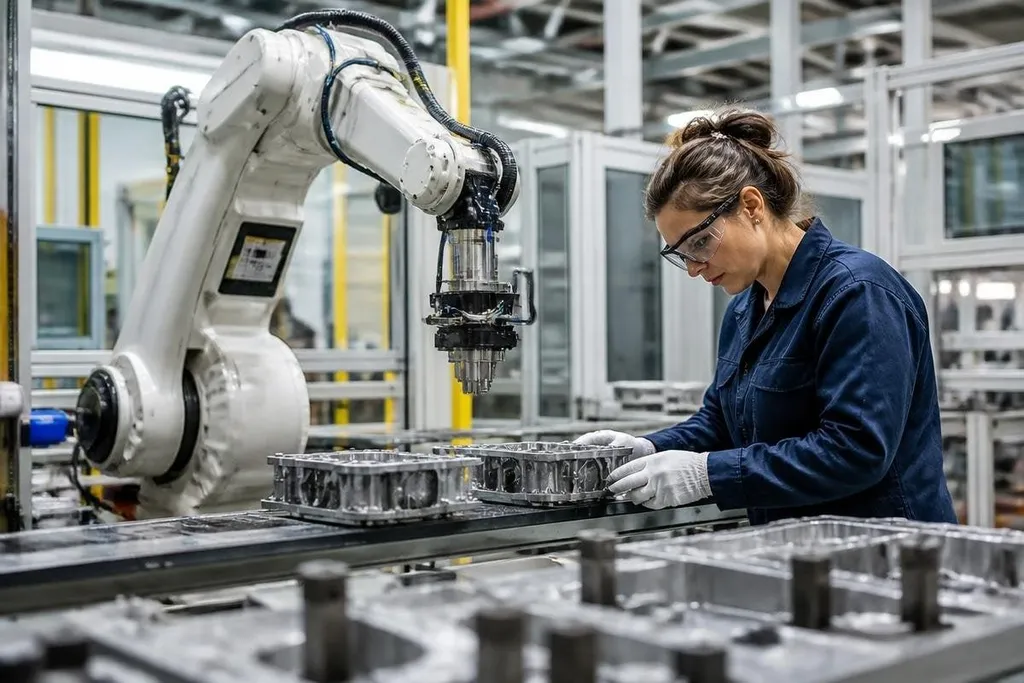
A robot rarely arrives with a clear answer about who keeps a job. It changes a set of tasks, and the effect on workers depends on what happens to those tasks next.
For a factory manager or worker, that makes the task list more useful than a headline about job losses.
- Robots can take over repeatable physical steps before they remove a whole job.
- Workers may move toward setup, inspection, repair, or supervision.
- The result depends on training, pay, work speed, and who owns the savings.
Start with the task, not the job title
A job title hides the work that a person does each hour. A warehouse associate may pick items, scan labels, move cartons, fix stock errors, and report damage. One of those jobs may go to the robot while the others stay with the worker.
That split changes the cost of a job without proving that the job will disappear. The company may need fewer people for lifting or transport, then need more people who can check sensors, reset a cell, or find why a carton went to the wrong lane.
The same machine can affect two sites in different ways. A plant with trained maintenance staff may add robot work without cutting headcount. A smaller site may cut positions if it can't pay for training or keep the system running.
Where the money moves
Robotics changes the path from a sale to a paycheck. A company pays for the robot, software, installation, power, repairs, and training. It then compares those costs with the labor and output linked to the old process.
If the robot lowers unit cost, the savings can go to several places. The company may cut prices, raise output, pay workers more, fund new equipment, or keep the gain as profit. The machine does not decide that split. Management and labor rules do.
Work speed matters too. A robot that runs through the night can add production hours, but only if orders exist and people can load, repair, and check the line. A faster machine can create more work around it while reducing the time needed for one narrow task.
A robot can change a worker’s daily task before it changes the headcount. Reports from Robot24.com on robots at work can connect that shift to a named machine and work site, giving you a better way to judge whether a job changes or disappears.
The worker's position can change
A worker who loses a repeatable task may gain a harder task with more responsibility. That can raise pay when the new work needs electrical, software, safety, or maintenance skills. It can also add pressure if the worker gets more duties without more time or money.
Training decides much of this shift. A short course may help with basic inspection. A deeper program may be needed for fault finding, robot programming, or safety checks. The useful question is not whether training exists, but who pays for it and whether the worker gets paid while learning.
Work quality belongs in the calculation. Removing heavy lifting can reduce physical strain. Faster production targets can raise mental strain. A proper review should check injury rates, schedule changes, control over the workday, and pay, not only output per hour.
What the numbers should measure
A serious review needs a start point and a later check. Count the people in each task group, hours worked, pay by role, training hours, downtime, output, and errors before the robot arrives. Repeat the same checks after the system has run long enough to show its normal pattern.
Do not treat headcount as the only result. A site can keep the same number of workers while changing shifts, pay, task control, or job security. Those changes affect household income even when the staff total stays still.
I’d judge a robotics project by the worker outcome as well as the production result.
A practical check before rollout
Use this list with a plant, warehouse, or service team before buying equipment:
- Map each task the robot may handle, including exceptions and rework.
- Record current pay, hours, injuries, output, and error rates.
- Name the new roles needed for setup, repair, inspection, and safety.
- Set training time and pay before workers move into those roles.
- Decide where the savings go and put that choice in writing.
- Review the results after the system has run through normal demand.
The economic effect of robotics is settled through those choices, not by the robot alone. The next useful question for any site is specific: which task changes first, who receives the gain, and what happens to the worker who did it?